
One of the first questions every developer asks before entering a deal seems simple:
Where is it worth investing?
Why does one city grow rapidly-attracting investment and developers-while another lags behind, despite similar on-paper indicators?
Over the years, I’ve learned that the answer isn’t found only in Excel spreadsheets, development rights, or master plans.
It lies behind the scenes of urban dynamics.
Seasoned developers sense this intuitively—but it can also be explained professionally: cities are driven forward not only by mayors or statutory plans, but by urban coalitions.
What Are Urban Coalitions?
Within every local authority, alongside planning policy and local planning culture, operate urban coalitions. Together, these coalitions form what the literature calls an urban regime—a set of formal and informal collaborations among different actors who work together to advance shared interests through urban planning and development.
These coalitions typically combine:
The public sector
The private sector
The civic and voluntary sector
This mix creates influential “urban players” with real impact on planning decisions—shaped by market forces, society, and local culture.
A Brief History—and Why It Matters Today
Research on urban regimes emerged in the United States after World War II, when political–economic elites controlled urban growth largely through real estate interests. In the 1960s and 1970s, social groups entered the arena, and by the 1970s and 1980s, civil rights, resident welfare, and quality of life became central considerations.
The result was a model in which urban development reflects a continuous balance among market forces, politics, society, and the environment. Urban coalitions translate this balance into policy, plans, and concrete planning outcomes. In my doctoral research, I referred to these forces as “external politics”—actors outside the municipal organization who nonetheless exert deep influence on urban decision-makers.
The City as a “Growth Machine”
To understand planning and development, one must recognize that a city is not only a place to live or work—it is also a growth machine.
Urban growth increases land values, generates wealth, and attracts diverse actors—even those who may disagree on other issues. Consequently, broad coalitions form around growth, often including:
Politicians
Local media
Infrastructure companies
Educational and higher-education institutions
Cultural institutions, museums, and theaters
Professional sports organizations
These coalitions arise from partnerships between local economic forces, business owners, and the municipality—and they are what actually drive development processes.
Not Only Within the City—But Beyond It
To understand how planning decisions are made, one must examine the relationships among:
National government
Regional government
Local government
and external actors operating “outside the system” yet influencing it: business leaders, landowners, community leaders, politicians, bureaucrats, and civil society organizations (NGOs).
The formal and informal ties among these actors often create mechanisms more effective than those of the establishment itself.
What Does a Developer Who “Feels” the City Do?
An experienced developer evaluates more than the plan or the plot. They ask:
Which coalitions operate in the city?
Who truly influences decision-making?
How can one integrate into this network?
In many cases, successful developers understand that advancing interests requires being part of the coalition—or at least deeply understanding its power structure.
Ideological Coalitions—Not Just Money
Beyond classic urban coalitions, there are also ideologically driven developers—entrepreneurs or activists motivated by values such as preservation, environmental protection, walkability, cycling, or public space, rather than profit alone.
Unlike purely economic coalitions, they seek direct influence over local decision-makers, not necessarily through the private market. They too are significant actors in shaping local planning culture.
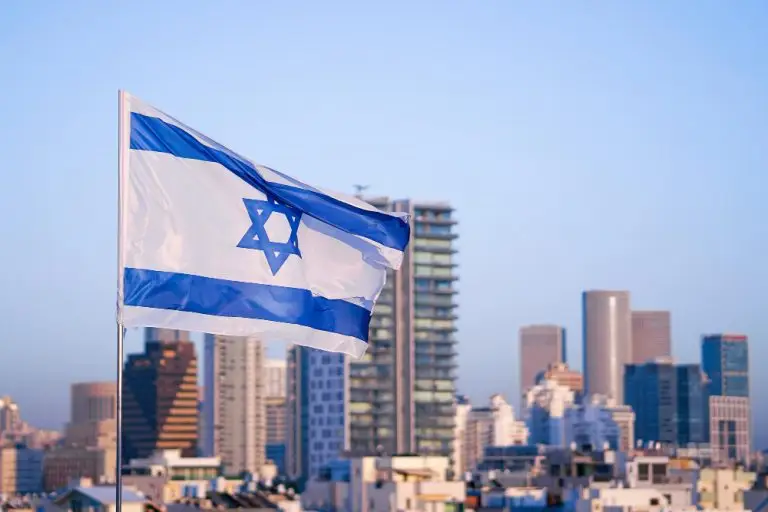
Urban Coalitions in Israel
In Israel, many organizations operate in the fields of sustainability and green building—such as the Society for the Protection of Nature in Israel, Adam Teva V’Din, Tzalul, the Israel Green Building Council, and others. While they often work independently, they form ad hoc coalitions when needed to create planning-committee lobbies opposing environmentally harmful plans.
Here as well—the coalition is a tool of power.
The Bottom Line
Understanding urban coalitions is not an academic exercise—it is a practical working tool.
Developers, planners, and agenda-driven actors who understand the forces operating within a city can act more precisely, shorten processes, reduce opposition, and advance high-quality, effective planning.
Ultimately, cities grow not only because of plans—but because of the people, alliances, and forces behind them.